October · Breast Cancer Awareness Month
care and second opinions
Somewhere in this image is a story no one has read yet.
Look closer.
1 in 13
Filipino women is expected to develop breast cancer in her lifetime. Lola, Nanay, Ate, Tita — the women who hold every Filipino family together.It could be any one of them.
No country in Asia has it higher.
About 60 in every 100,000 Filipinas are diagnosed with breast cancer each year — the highest rate in Asia.
A screening rate as low as 2.22%. For most women, a mammogram is still too far away, too expensive — or simply never offered.
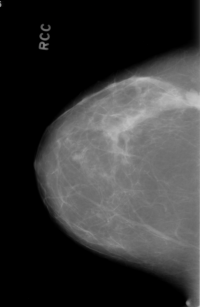
This is a mammogram.
A low-dose X-ray of the breast — still the best tool we have for finding cancer early, often years before a lump can be felt.
Dense tissue glows white. So can a tumor.
Healthy tissue and something dangerous can look almost the same. Reading one is like finding a cloud inside a fog.
Scan after scan. Tired eyes.
Doctors read image after image, often at the end of long shifts. The faintest signs are the easiest to miss.
It was here. Did you see it?
A cancer, later confirmed by biopsy and circled by a doctor. Small, quiet, and hiding in plain sight.
Now, imagine a second pair of eyes.
One that never gets tired, never rushes, and looks at every part of every image — the same careful way, every time.
It reads every pixel.
Line by line, it studies the whole mammogram — not only where we expect trouble, but everywhere trouble could be.
Then it shows where it looked.
Not just “cancer” or “no cancer.” The image rises wherever the evidence is strongest — an answer you can see, question and check.
Right on the doctor’s mark.
The highest peak lands on the biopsy-confirmed cancer. Not a black box — a reading a doctor can verify, and trust.
Not every case is obvious.
Some cancers are loud. Some whisper. Some bright spots turn out to be nothing at all. Here is how it reads three of them.
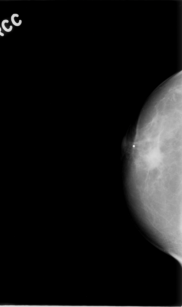
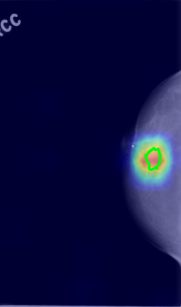
A small lump near the edge. It found it — and pointed right at it.
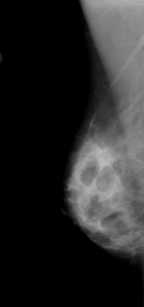
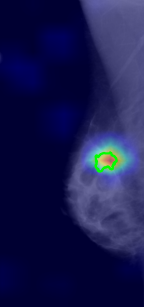
Less certain. A signal for the doctor to take a closer look.
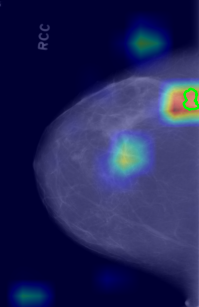
It checked the suspicious spot first — then judged it low-risk.
When it is unsure, it says so. A lower number is a signal for the doctor to look closer — not a final word.
cancers caught.
Set to screen, it flagged 91.3% of the cancers in a final exam of mammograms it had never seen before.
Fewer cancers slip through.
Out of 138 cancers, the first version missed 38. Tuned to be more careful, it missed just 12 — more than two-thirds fewer.
It points at the right place.
Its heatmap is 8.5 times more likely than a random guess to land on the actual lump. The explanation is not decoration — it is evidence.
7,641 islands.
One country, scattered across the sea — and one of the hardest places in the world to bring a specialist to.
About 2 radiologists for every 100,000 Filipinos.
The United Kingdom has 8.5. Singapore has 7.6. Here, the doctors trained to read a mammogram are few — and far between.
Nearly half are in Metro Manila.
Home to about 12% of Filipinos, it holds 46.6% of PhilHealth-accredited radiologists. 28 provinces have none at all.
Now imagine every island with a second look.
A mammogram taken at a provincial clinic, read the same day. A heatmap that shows the visiting doctor where to look first. Fewer women told too late.
She takes care of everyone. Who takes care of her?
The lola raising the grandkids. The nanay working abroad. The ate who never takes a day off. Care for them starts with one habit: knowing her own body.
Five signs worth a doctor’s look.
Check once a month, a few days after your period. Most changes are not cancer — but every change deserves to be seen.
Ikaw muna. You first.
Ask your doctor when to start mammograms — sooner if breast cancer runs in your family. Bring your mother. Bring a friend. Go together.
A second pair of eyes. Never a replacement for doctors.
This October, ask the women you love when they last had a mammogram. Then help them book the next one.